
| Getting your Trinity Audio player ready… |
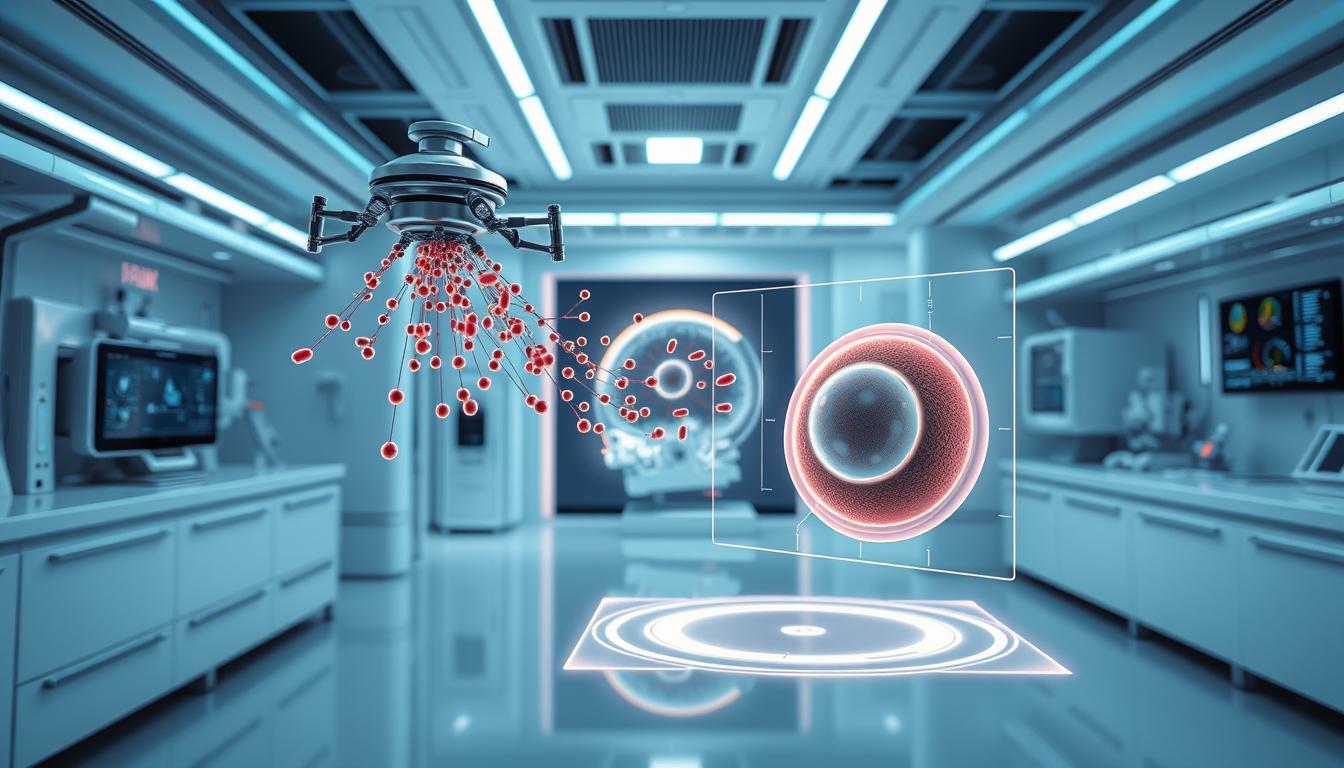
Healthcare is undergoing a revolution, and at its core is the groundbreaking field of nanotechnology. From diagnostics to treatment, this science is reshaping how we approach disease prevention and care. Its potential lies in its ability to operate at the smallest scales, offering precision and efficiency like never before.
The journey began with Richard Feynman’s visionary idea of manipulating matter at the atomic level. Today, his “room at the bottom” concept has evolved into advanced nanomedicine. Researchers are now leveraging nanoparticles and nanomaterials to create innovative drug delivery systems that target specific cells, minimizing side effects and maximizing effectiveness.
Academic platforms like Google Scholar are brimming with studies showcasing these advancements. From cancer therapies to early disease detection, the applications are vast and transformative. As we explore this ultimate guide, we’ll delve deeper into how these technologies are shaping the future of healthcare.
Key Takeaways
- Nanotechnology is revolutionizing healthcare through precise and targeted treatments.
- Richard Feynman’s vision laid the foundation for modern nanomedicine.
- Nanoparticles and nanomaterials are key to innovative drug delivery systems.
- Current research, accessible on Google Scholar, highlights practical applications.
- This guide will explore the transformative potential of nanotechnology in detail.
Introduction to Nanotechnology in Healthcare
The fusion of science and healthcare is unlocking new possibilities for treatment and diagnostics. I’ve always been fascinated by how tiny innovations can lead to monumental changes. This is especially true in the realm of nanomedicine, where precision and efficiency are redefining modern healthcare.
Personal Reflections on the Promise of Nanomedicine
Reflecting on the potential of nanomedicine, I’m struck by its ability to address challenges that once seemed insurmountable. By operating at the molecular level, it offers a level of precision that traditional methods simply cannot match. This isn’t just about treating diseases; it’s about transforming how we approach healthcare altogether.
Understanding the Impact on Modern Treatment
One of the most exciting aspects of nanotechnology is its integration into diagnostics and therapeutics. Advanced delivery systems are enabling targeted drug delivery, reducing side effects, and increasing efficacy. For instance, nanoparticles can deliver medication directly to cancer cells, sparing healthy tissue.
Current research is leveraging nanomaterials to revolutionize diagnostics and therapy. Studies highlight innovations in nano-enabled systems, showcasing their practical applications. These advancements are not just theoretical; they’re already making a difference in patient outcomes.
| Aspect | Traditional Methods | Nanotechnology-Based Methods |
|---|---|---|
| Precision | Broad targeting | Cell-specific targeting |
| Side Effects | High | Minimal |
| Efficacy | Variable | Enhanced |
The role of micro- and nanotechnology in achieving unprecedented precision cannot be overstated. It’s a testament to how interdisciplinary research is pushing the boundaries of what’s possible in healthcare.
The History and Evolution of Nanomedicine
The journey of nanomedicine began with a bold vision that reshaped science and healthcare. From its inception, the field has grown into a transformative force, offering precision and efficiency in ways previously unimaginable. This section explores its historical roots and the milestones that have shaped its evolution.
Pioneering Visions from Richard Feynman to Today
Richard Feynman’s 1959 lecture, “There’s Plenty of Room at the Bottom,” laid the groundwork for modern nanomedicine. He envisioned manipulating matter at the atomic level, a concept that seemed far-fetched at the time. Today, his ideas have become the foundation for groundbreaking advancements in healthcare.
Feynman’s vision inspired researchers to explore the potential of nanoscale manipulation. This led to the development of nanoparticles and nanomaterials, which are now integral to targeted drug delivery systems. His foresight continues to guide the field, proving that even the smallest innovations can have a monumental impact.
Milestones in Nanoscience Research
Over the decades, nanoscience research has achieved remarkable milestones. One of the earliest breakthroughs was the invention of the scanning tunneling microscope in 1981, which allowed scientists to observe and manipulate atoms. This paved the way for further innovations in nanotechnology.
Another significant achievement was the development of liposomes in the 1960s, which are now used as drug delivery vehicles. More recently, advancements in quantum dots and nanorobots have opened new possibilities for diagnostics and treatment. These milestones highlight the transformative potential of nanotechnology in healthcare.
| Year | Milestone | Impact |
|---|---|---|
| 1959 | Feynman’s Lecture | Inspired nanoscale research |
| 1981 | Scanning Tunneling Microscope | Enabled atomic manipulation |
| 1960s | Liposomes | Revolutionized drug delivery |
| 2000s | Quantum Dots | Enhanced imaging techniques |
The role of scholarly research, accessible through platforms like Google Scholar, has been instrumental in advancing the field. Studies published in reputable journals continue to validate the potential of nanotechnology, offering insights into its practical applications. These historical perspectives provide valuable guidance for emerging trends in targeted treatment strategies.
Fundamentals of Nanotechnology: Principles and Properties
The principles of nanotechnology are reshaping how we understand and manipulate matter at its most fundamental level. By operating at the nanoscale, scientists can harness unique properties that are not present in bulk materials. This opens up new possibilities for applications in healthcare, particularly in reducing drug side effects and improving delivery systems.
Quantum Phenomena at the Nanoscale
At the nanoscale, quantum phenomena dominate the behavior of materials. These phenomena, such as quantum confinement, give nanomaterials their unique characteristics. For example, nanoparticles can exhibit enhanced stability and reactivity, making them ideal for targeted drug delivery. This precision minimizes harm to healthy cells, a significant advantage over traditional methods.
“Quantum effects at the nanoscale are not just theoretical; they are the foundation of practical innovations in medicine.”
Unique Material Properties and Their Applications
Nanomaterials possess properties that differ significantly from their bulk counterparts. These include increased surface area, improved mechanical strength, and unique optical behaviors. Such properties are leveraged in medical applications to enhance drug stability and efficacy. For instance, nanoparticles can encapsulate medications, protecting them from degradation and ensuring controlled release.
Current articles in peer-reviewed journals highlight how these properties are being used to develop advanced therapies. One study demonstrated how quantum dots improve imaging techniques, aiding in early disease detection. Another explored the use of nanocarriers to deliver chemotherapy directly to cancer cells, reducing side effects.
| Property | Bulk Materials | Nanomaterials |
|---|---|---|
| Surface Area | Low | High |
| Reactivity | Moderate | Enhanced |
| Stability | Variable | Improved |
The differences between bulk materials and their nano counterparts are striking. These unique properties are not just academic curiosities; they are driving real-world innovations. From improving drug delivery to enhancing diagnostic tools, nanotechnology is proving to be a game-changer in healthcare.
Nanotech in Medicine: Transforming Targeted Drug Delivery
The precision of nanotechnology is reshaping how we approach targeted drug delivery. By leveraging nanomaterials, scientists are creating systems that interact directly with specific cells and tissues. This reduces off-target effects and enhances therapeutic outcomes.
Integrating Nanomaterials into Therapeutic Strategies
Nanoparticles are designed to interact with the surface of target cells, ensuring precise delivery. This mechanism minimizes damage to healthy tissue, a significant improvement over traditional methods. For example, nanocarriers can encapsulate drugs, protecting them until they reach their destination.
Recent studies highlight the effectiveness of these systems. One research project demonstrated how nanocarriers improved drug stability and controlled release. Another showed enhanced precision across various tissue types, proving their versatility.
“The integration of nanomaterials into drug delivery is not just a theoretical concept; it’s a practical solution transforming healthcare.”
Here are some key advancements in this field:
- Nanocarriers improve therapeutic efficacy by targeting specific cells.
- They reduce toxic exposure by minimizing off-target effects.
- Nano-engineered systems enhance precision across diverse tissue types.
These innovations are not just theoretical. They are already making a difference in patient care, offering safer and more effective treatments. By combining theoretical principles with practical applications, nanotechnology is revolutionizing drug delivery.
Applications of Nanotechnology in Diagnostics
The use of nanoparticles is transforming diagnostic techniques, enabling early and accurate disease detection. By leveraging their unique properties, these tiny structures are enhancing imaging modalities and improving the precision of diagnostic tools. This advancement is not just theoretical; it’s already making a significant impact in healthcare.
Enhanced Imaging Techniques with Nanoparticles
Nanoparticles are revolutionizing medical imaging, providing clearer and more detailed insights. For instance, they improve the contrast in MRI and CT scans, making it easier to identify abnormalities. This application of nanotechnology ensures that diseases are detected at earlier stages, improving treatment outcomes.
Recent studies highlight how these advanced materials enhance imaging accuracy. By targeting specific cells or tissues, nanoparticles reduce the need for invasive procedures. This innovation is a game-changer for both patients and healthcare providers.
Early Disease Detection at the Molecular Level
One of the most exciting applications of nanotechnology is its ability to detect diseases at the molecular level. Nanoparticles can identify biomarkers that indicate the presence of conditions like cancer or infections long before symptoms appear. This early detection is crucial for effective treatment.
Lab-on-chip diagnostics, powered by nanomaterials, are another breakthrough. These devices enable rapid and accurate testing, even in resource-limited settings. By combining advanced materials with innovative designs, nanotechnology is making diagnostics more accessible and reliable.
Lab-on-Chip Technology: Convergence of Nanotech and Diagnostics
The future of diagnostics is being reshaped by the integration of nanotechnology into lab-on-chip devices. These miniaturized platforms are revolutionizing how we detect and manage disease, offering rapid and precise solutions. By combining advanced materials with microfluidic systems, they are setting new standards in healthcare.
Advances in Miniaturized Testing Platforms
Lab-on-chip technology is transforming point-of-care diagnostics. These portable systems allow for quick testing and immediate results, making them ideal for remote or resource-limited settings. Their ability to detect disease at early stages is a game-changer for patient outcomes.
One of the most exciting aspects is the convergence of nanotechnology with microfluidics. This combination enables precise control over fluid movement at the nanoscale, enhancing the accuracy of tests. For example, nanoparticles can be used to identify biomarkers, ensuring targeted treatment plans.
“Lab-on-chip devices are not just tools; they are the future of personalized medicine.”
Another breakthrough is the development of implantable diagnostic devices. These offer real-time monitoring of health conditions, providing continuous data for better treatment decisions. Studies show that these innovations are already improving patient care, reducing systemic risks, and enhancing outcomes.
Here are some key benefits of lab-on-chip technology:
- Portable and accessible testing platforms.
- Early detection of disease through precise biomarkers.
- Real-time monitoring with implantable devices.
- Reduced systemic risks through targeted therapies.
Modern research supports the effectiveness of these platforms. For instance, a recent study demonstrated how lab-on-chip devices improved the accuracy of cancer diagnostics. Another highlighted their role in managing chronic conditions, proving their versatility and impact.
Revolutionary Drug Delivery Systems in Nanomedicine
The evolution of drug delivery systems has reached a new frontier with the advent of nanomedicine. By leveraging the unique properties of nanomaterials, scientists are creating innovative solutions that redefine precision in treatment. These advancements are not just theoretical; they are already transforming patient care.
Designing Nanocarriers for Controlled Release
One of the most significant breakthroughs in nanomedicine is the development of nanocarriers. These tiny structures are designed to encapsulate drugs, ensuring controlled and sustained release. This approach minimizes fluctuations in drug concentration, enhancing therapeutic efficacy.
For example, liposomal formulations like Doxil® have demonstrated remarkable success in cancer treatment. By protecting the drug until it reaches its target, these systems reduce off-target effects and improve patient outcomes. The design process involves careful selection of materials and surface modifications to optimize performance.
Target-Specific Delivery to Minimize Side Effects
Target-specific delivery is another game-changing aspect of nanomedicine. By directing drugs to specific cells or tissues, these systems minimize damage to healthy areas. This is particularly crucial in cancer treatments, where traditional chemotherapy often causes severe side effects.
Recent clinical studies highlight the effectiveness of this approach. One study showed that nanocarriers improved drug stability and controlled release, leading to better outcomes. Another demonstrated enhanced precision across diverse tissue types, proving their versatility.
“The ability to target specific cells has transformed the landscape of modern drug delivery.”
Here are some key benefits of these systems:
- Precision in targeting specific cells or tissues.
- Reduced side effects through minimized off-target exposure.
- Improved therapeutic outcomes through controlled release.
| Aspect | Traditional Methods | Nanomedicine-Based Methods |
|---|---|---|
| Precision | Broad targeting | Cell-specific targeting |
| Side Effects | High | Minimal |
| Efficacy | Variable | Enhanced |
The role of next-generation nanotechnologies in overcoming the limitations of conventional methods cannot be overstated. As research continues, the scope of targeted therapies will only broaden, offering hope for safer and more effective treatments.
Nanoscience in Pharmaceutical Sciences: Dose Specification and Safety
The intersection of nanoscience and pharmaceutical sciences is redefining how we approach drug dosing and safety. By leveraging the unique properties of nanoparticles, researchers are optimizing pharmacokinetics and bioavailability, ensuring treatments are both effective and safe. This innovation is not just theoretical; it’s already transforming patient care.

Optimizing Pharmacokinetics and Bioavailability
One of the most significant advancements in medicine is the use of nanoscale drug formulations. These systems enhance drug absorption and distribution, improving therapeutic outcomes. For example, nanoparticles can protect medications from degradation, ensuring they reach their target sites intact.
However, precise dose specification remains a challenge. Nano-enabled therapies require careful calibration to avoid under- or over-dosing. Recent studies highlight strategies to address this, such as surface modifications and controlled release mechanisms. These approaches ensure that drugs are delivered at the right time and in the right amount.
“The precision of nanoscience is not just about improving efficacy; it’s about ensuring safety through optimized dosing.”
Challenges and Innovations in Nano-Drug Formulation
Developing nanoparticle-based drugs comes with its own set of hurdles. One major challenge is ensuring consistent drug release across different patients. Variability in metabolism and physiology can affect how these drugs perform. Researchers are tackling this by designing adaptive systems that respond to individual needs.
Another focus is reducing toxicity. Traditional drugs often cause side effects due to off-target interactions. Nanoparticles, on the other hand, can be engineered to minimize these risks. For instance, they can be coated with biocompatible materials that reduce immune system reactions.
Here are some key advancements in this field:
- Enhanced drug stability through encapsulation.
- Improved targeting to reduce off-site effects.
- Adaptive systems for personalized dosing.
The development of these technologies is paving the way for safer and more effective treatments. By combining theoretical principles with practical applications, nanoscience is revolutionizing pharmaceutical sciences.
DNA Nanotechnology: The Future of Gene Therapy and Drug Delivery
The future of healthcare is being redefined by the innovative field of DNA nanotechnology. This cutting-edge technology is revolutionizing how we approach gene therapy and drug delivery, offering unprecedented precision and efficiency. By leveraging the unique properties of DNA, scientists are creating self-assembling nanostructures that can target specific cells and tissues.
Self-Assembling Structures for Precision Medicine
One of the most exciting developments in DNA nanotechnology is the creation of self-assembling structures. These nanostructures are designed to act as precision carriers for therapeutic agents, ensuring they reach their intended targets with minimal off-site effects. This process mimics natural biological systems, making it highly effective for gene therapy applications.
The self-assembly process involves the careful design of DNA sequences that can fold into specific shapes. These shapes are then used to encapsulate drugs or genetic material, protecting them until they reach their destination. This approach is particularly promising for treating genetic disorders, as it allows for the precise delivery of corrective genes.
“DNA nanotechnology is not just a scientific breakthrough; it’s a practical solution for the future of precision medicine.”
However, developing these complex nano-assemblies comes with its own set of challenges. The engineering process requires a deep understanding of molecular biology and nanotechnology. Researchers must ensure that these structures are stable, biocompatible, and capable of releasing their payloads at the right time and place.
Here are some key advancements in this field:
- DNA-based nanostructures improve the accuracy of targeted gene therapy.
- Self-assembling carriers enhance the delivery of therapeutic agents.
- Advanced engineering techniques are overcoming current therapy limitations.
The integration of genetic engineering principles with DNA nanotechnology is opening new doors for personalized medicine. By tailoring treatments to individual genetic profiles, this technology has the potential to transform healthcare, offering safer and more effective therapies.
Recent research highlights the transformative potential of DNA nanotechnology. Studies predict that these advancements will lead to significant improvements in the treatment of genetic disorders, cancer, and other complex diseases. As we continue to explore this field, the possibilities for precision medicine are truly limitless.
Nanobiotechnology: Merging Engineering and Medicine
The convergence of engineering and medicine is paving the way for groundbreaking advancements in healthcare. This interdisciplinary field is transforming how we approach therapy and surgery, offering solutions that were once thought impossible. By combining principles from both disciplines, nanobiotechnology is unlocking new possibilities for precision and efficiency.
Biodegradable Nanoparticles in Therapeutic Applications
One of the most promising aspects of nanobiotechnology is the use of biodegradable nanoparticles. These materials are designed to break down naturally in the body, reducing long-term toxicity. This property makes them ideal for targeted drug delivery, ensuring that medications reach their intended sites without harming healthy tissues.
For example, biodegradable nanoparticles are being used in cancer therapy to deliver chemotherapy directly to tumors. This approach minimizes side effects and improves patient outcomes. The field is also exploring their use in treating chronic conditions like diabetes, where controlled drug release is crucial.
“Biodegradable nanoparticles are not just a scientific breakthrough; they are a practical solution for safer and more effective treatments.”
Potential Surgical Applications of Nanorobots
Nanorobots are another exciting development in this field. These tiny devices can perform minimally invasive surgery with unparalleled precision. For instance, they can navigate through the bloodstream to remove blockages or repair damaged tissues. This reduces recovery times and lowers the risk of complications.
Current research is also exploring their use in diagnostics. Nanorobots can detect early signs of disease, allowing for timely intervention. This combination of therapy and diagnostics is revolutionizing how we approach healthcare.
Here are some key advancements in nanobiotechnology:
- Biodegradable nanoparticles reduce long-term toxicity.
- Nanorobots enable precise and minimally invasive surgery.
- Unique properties of nanomaterials enhance therapeutic outcomes.
The interdisciplinary nature of this field is driving innovation. By merging engineering and medicine, researchers are creating solutions that are both effective and safe. As we continue to explore these technologies, the potential for improving healthcare is truly limitless.
Advances in Nanotechnology for Cancer Treatment
Cancer treatment is entering a new era, driven by the precision of nanotechnology. This innovative approach is transforming how we target and treat tumors, offering hope for more effective and less harmful therapies. By operating at the nanoscale, scientists can deliver treatments directly to cancer cells, minimizing damage to healthy tissues.
Targeted Cancer Therapies Using Nanoparticles
One of the most promising applications of nanotechnology is its ability to create targeted therapies. Nanoparticles can be engineered to seek out and attach to cancer cells, delivering drugs directly to the tumor. This precision reduces the risk of harming healthy cells, a common issue with traditional chemotherapy.
For example, FDA-approved drugs like Doxil® and Abraxane® use nanoparticles to improve drug delivery. These systems encapsulate chemotherapy agents, protecting them until they reach the tumor site. This not only enhances the drug’s effectiveness but also reduces side effects.
“Targeted therapies are not just a scientific breakthrough; they are a practical solution for safer and more effective cancer treatment.”
Reducing Toxicity in Chemotherapy
Chemotherapy often comes with severe side effects due to its impact on healthy cells. Nanotechnology is addressing this challenge by improving drug delivery systems. By encapsulating chemotherapy agents, nanoparticles ensure that the drugs are released only at the tumor site, sparing the rest of the body.
Recent advancements have shown that these systems can significantly reduce systemic toxicity. For instance, studies have demonstrated that nanoparticle-based therapies improve patient outcomes by minimizing off-target effects. This is a game-changer for cancer patients, offering a safer and more effective treatment option.
Here are some key benefits of nanotechnology in cancer treatment:
- Precision targeting of tumor cells.
- Reduced side effects on healthy tissues.
- Improved drug stability and controlled release.
These innovations are paving the way for future improvements in cancer treatment protocols. By combining theoretical principles with practical applications, nanotechnology is revolutionizing how we approach this complex disease.
Breakthroughs in Molecular Imaging and In Vivo Diagnostics
Molecular imaging is experiencing a transformative shift, thanks to advancements in nanotechnology. These innovations are enhancing diagnostic precision, enabling early disease detection, and improving patient health outcomes. By leveraging nanomaterials, researchers are pushing the boundaries of what’s possible in medical imaging.

Enhancing MRI, CT, and Optical Imaging
Nanodevices are revolutionizing traditional imaging techniques like MRI and CT scans. By introducing nano-contrast agents, these devices provide clearer and more detailed images. This improvement allows for the detection of abnormalities at earlier stages, which is crucial for effective treatment.
Optical imaging has also benefited from these advancements. Nanoparticles enhance the sensitivity of imaging tools, making it possible to visualize single cancer cells in real-time. This level of precision is a game-changer for diagnosing and monitoring diseases.
“The integration of nanomaterials into imaging is not just a scientific breakthrough; it’s a practical solution for improving diagnostic accuracy.”
Here are some key advancements in molecular imaging:
- Nano-contrast agents improve image clarity in MRI and CT scans.
- Real-time imaging of cancer cells enables precise monitoring.
- Enhanced sensitivity in optical imaging supports early disease detection.
Clinical trials have validated the effectiveness of these technologies. For example, studies show that nano-enhanced imaging improves the accuracy of cancer diagnostics. These innovations are not just theoretical; they are already making a difference in patient care.
The integration of in vivo diagnostics with nanotechnology is transforming how we approach health. By combining technical advancements with practical applications, these devices are setting new standards in early disease detection and treatment.
The Role of Nanomaterials in Regenerative Medicine
Regenerative medicine is being transformed by the unique properties of nanomaterials. These advanced materials are paving the way for innovative solutions in tissue repair and reconstruction. By mimicking natural structures, they offer unprecedented precision in guiding cell growth and differentiation.
One of the most exciting applications is in tissue engineering. Nanomaterials are used to create scaffolds that replicate the extracellular matrix, providing a framework for cells to grow and regenerate. This approach is particularly effective in bone grafts, where synthetic substitutes are designed to integrate seamlessly with natural tissue.
Innovative Uses in Tissue Engineering
In tissue engineering, nanomaterials are revolutionizing how we approach repair and regeneration. For example, biomineralization techniques use these materials to develop synthetic bone grafts that closely resemble natural bone. This not only accelerates healing but also reduces the risk of rejection.
Another breakthrough is the use of nanomaterials in creating functional scaffolds. These structures guide cell proliferation and differentiation, ensuring that new tissue forms correctly. This is especially valuable in complex cases where traditional methods fall short.
“The ability to mimic natural structures with nanomaterials is a game-changer for regenerative medicine.”
Ongoing research is also improving diagnostic capabilities. Advanced imaging techniques allow us to assess tissue regeneration in real-time, ensuring that treatments are effective. This is a significant step forward in personalized medicine.
Looking ahead, the potential of nanomaterials in regenerative therapies is immense. From repairing damaged tissues to developing new diagnostic tools, these materials are setting the stage for a healthier future.
Overcoming Challenges: Safety, Side Effects, and Ethical Considerations in Nanomedicine
The advancement of nanomedicine brings immense potential, but it also raises critical safety and ethical concerns. As we explore its applications, addressing these challenges becomes essential to ensure its successful integration into healthcare.
Managing Potential Toxicity and Side Effects
One of the primary concerns in nanomedicine is the potential toxicity of nanoparticles. While these materials offer precision in targeting specific cells, their long-term effects on the body are still under research. For example, some nanoparticles may accumulate in organs, leading to unforeseen complications.
To mitigate these risks, scientists are developing biodegradable nanoparticles that break down safely in the body. This approach minimizes long-term toxicity and ensures that treatments are both effective and safe. Rigorous science is essential to understanding how these materials interact with biological systems.
“The key to safe nanomedicine lies in understanding the behavior of nanoparticles at the molecular level.”
Clinical trials play a crucial role in identifying and addressing side effects. By monitoring patient responses, researchers can refine treatments to minimize harm while maximizing benefits.
Addressing Environmental and Ethical Issues
Beyond safety, nanomedicine raises significant environmental and ethical questions. The production and disposal of nanoparticles can have ecological impacts, requiring careful regulation. Current research focuses on developing sustainable practices to reduce these effects.
Ethical dilemmas also arise in the use of nanotechnology. For instance, how do we ensure equitable access to these advanced treatments? Transparency in science and clear communication with the public are vital to addressing these concerns.
Regulatory frameworks are being developed to guide the safe use of nanomedicine. These guidelines aim to balance innovation with responsibility, ensuring that patient safety and environmental health are prioritized.
As we continue to explore the possibilities of nanomedicine, addressing these challenges will be crucial. By combining rigorous research with ethical considerations, we can unlock its full potential while safeguarding patient well-being and the environment.
Future Trends in Nanotechnology and Healthcare
The future of healthcare is being shaped by cutting-edge advancements in nanotechnology, with emerging research paving the way for revolutionary innovations. As we look ahead, the integration of next-generation nanodevices and novel methods promises to redefine treatment and diagnostics.
Emerging Research and Next-Generation Nanodevices
One of the most exciting areas of research is the development of quantum dot technology. These tiny semiconductor particles are transforming imaging and diagnostics by providing unparalleled precision. For example, they enhance the clarity of medical imaging, enabling early detection of diseases like cancer.
Another promising trend is the use of advanced nanodevices for targeted drug delivery. These devices are designed to interact with specific cells, ensuring that medications reach their intended targets with minimal side effects. This method is particularly effective in treating complex conditions like cancer and autoimmune disorders.
“The integration of quantum dots and nanodevices is not just a scientific breakthrough; it’s a practical solution for improving patient outcomes.”
Here are some key advancements shaping the future:
- Quantum dot technology enhances imaging and diagnostics.
- Next-generation nanodevices improve targeted drug delivery.
- Innovative methods are refining treatment protocols.
As we continue to explore these technologies, the potential for improving healthcare is immense. From early disease detection to personalized treatments, the future of nanotechnology in healthcare is bright.
| Trend | Application | Impact |
|---|---|---|
| Quantum Dots | Enhanced Imaging | Early Disease Detection |
| Nanodevices | Targeted Drug Delivery | Reduced Side Effects |
| Innovative Methods | Personalized Treatments | Improved Patient Outcomes |
The challenges of integrating these technologies into existing healthcare systems are significant, but the possibilities are even greater. By combining rigorous research with practical applications, we can unlock the full potential of nanotechnology for a healthier future.
Conclusion
The landscape of healthcare is evolving rapidly, driven by groundbreaking advancements in targeted therapies and diagnostics. Throughout this article, we’ve explored how nanotechnology has revolutionized treatment and diagnostics, offering precision and efficiency like never before.
From its historical roots to modern applications, targeted drug delivery systems have transformed patient care. Technologies like carbon nanotubes are paving the way for innovative solutions, reducing side effects and improving outcomes. Breakthroughs in imaging and regenerative medicine further highlight the potential of these advancements.
Ongoing research is crucial to overcoming challenges and unlocking the full potential of these technologies. The future of healthcare is bright, with relentless scientific progress driving innovation. I’m optimistic about the possibilities, from personalized treatments to early disease detection.
As we move forward, I invite continued scholarly inquiry and dialogue. The future of targeted therapies and diagnostic precision is promising, and together, we can shape a healthier world.
FAQ
What is the role of nanotechnology in healthcare?
Nanotechnology plays a crucial role in healthcare by enabling targeted drug delivery, improving diagnostics, and enhancing treatment efficacy. It allows for precise control over drug release and minimizes side effects.
How does nanotechnology improve drug delivery systems?
Nanotechnology improves drug delivery systems by using nanocarriers to transport drugs directly to diseased cells or tissues. This targeted approach reduces damage to healthy cells and increases treatment effectiveness.
What are the applications of nanotechnology in cancer treatment?
In cancer treatment, nanotechnology is used to deliver chemotherapy drugs directly to cancer cells, reducing toxicity to healthy tissues. It also enhances imaging techniques for early detection and monitoring of tumors.
What are the safety concerns associated with nanomedicine?
Safety concerns in nanomedicine include potential toxicity of nanoparticles, long-term effects on the body, and environmental impact. Rigorous testing and ethical considerations are essential to address these issues.
How is nanotechnology used in diagnostics?
Nanotechnology enhances diagnostics by improving imaging techniques like MRI and CT scans. Nanoparticles can also be used for early disease detection at the molecular level, providing more accurate and timely diagnoses.
What is the future of nanotechnology in healthcare?
The future of nanotechnology in healthcare includes the development of next-generation nanodevices, advanced drug delivery systems, and innovative treatments for complex diseases. Ongoing research aims to overcome current limitations and expand its applications.
How does nanotechnology contribute to regenerative medicine?
Nanotechnology contributes to regenerative medicine by providing materials and techniques for tissue engineering and repair. It helps in creating scaffolds that support cell growth and tissue regeneration, aiding in the recovery of damaged organs.
What are the ethical considerations in nanomedicine?
Ethical considerations in nanomedicine include ensuring patient safety, addressing potential environmental impacts, and maintaining transparency in research and development. Ethical guidelines are crucial for the responsible advancement of this field.

Leave a Reply